For nearly two centuries, Floreana Island in the Galapagos existed without one of its most iconic inhabitants. Giant tortoises once roamed the island in vast numbers, shaping the landscape with slow but powerful ecological influence. By the mid-1800s, however, whalers and early settlers had removed thousands of these animals, driving the native population to extinction.
Today, an extraordinary conservation effort is rewriting that history.
In a landmark restoration project, conservationists and Galapagos National Park rangers have begun reintroducing juvenile giant tortoises to Floreana Island. The first group—more than 150 young tortoises between roughly 8 and 13 years old—has already stepped onto the island’s volcanic terrain, marking the first time in approximately 180 years that these ancient reptiles have returned to their ancestral home.
The initiative is part of the ambitious Floreana Ecological Restoration Project, a long-term effort involving the Galapagos National Park, the Charles Darwin Foundation, and several international conservation organizations. Over time, scientists plan to release hundreds of tortoises in order to rebuild a self-sustaining population.
For travelers exploring the Galapagos aboard luxury expedition cruises, this moment represents something rare: the chance to witness conservation history unfolding in real time.
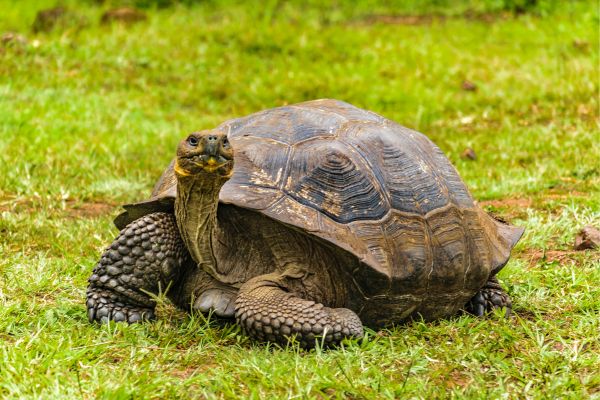
Table of contents
- Conservation and Ecological Importance
- Why Giant Tortoises Are Ecosystem Engineers
- Rebuilding an Island Ecosystem - Wolf Volcano Genetics and the Science of “Genetic Rescue”
- Why Giant Tortoises Live So Long
- Slow Metabolism and Cellular Stability
- Evolution in Isolation - Experiencing Floreana Through Expedition Cruises
- Luxury Galapagos Cruise Itineraries That Visit Floreana
- FAQ: Giant Tortoises and Floreana Island
- Why did giant tortoises disappear from Floreana?
- How many tortoises have been released on Floreana?
- Where did the new tortoises come from?
- Can visitors see giant tortoises on Floreana? - A Symbol of Hope for the Galapagos
Conservation and Ecological Importance
Why Giant Tortoises Are Ecosystem Engineers
Giant tortoises are often described as “ecosystem engineers”, and for good reason. Their presence influences almost every aspect of the island landscape.
As they move slowly across the terrain, tortoises:
-
Disperse seeds through digestion, helping plants spread across the island
-
Create natural pathways through dense vegetation
-
Regulate plant growth by grazing
-
Shape habitats that support birds, insects, and other wildlife
Without them, the ecological balance of islands like Floreana shifts dramatically.
When the tortoises disappeared in the 19th century, the effects rippled through the ecosystem. Native plants declined, invasive vegetation spread, and several endemic bird species disappeared from the island. Over time, goats, rats, pigs, and other introduced species further degraded the fragile environment.
Restoring tortoises is therefore about far more than saving a single species. Their return helps rebuild entire ecological processes that evolved over thousands of years.
.jpg?alt=media&token=23c33581-3b4e-4d81-81d3-406d2bb2577f)
Rebuilding an Island Ecosystem
The reintroduction of giant tortoises comes after more than a decade of groundwork. Conservation teams first had to address the island’s invasive species problem—removing large herbivores such as goats and donkeys and controlling rats that prey on tortoise eggs.
Simultaneously, restoration efforts focused on reestablishing native vegetation and working with the island’s small farming community to improve biosecurity and sustainable land use.
The reintroduction of tortoises is therefore the culmination of a long, carefully planned ecological strategy. If successful, Floreana could become a model for island restoration across the Galapagos archipelago.
Wolf Volcano Genetics and the Science of “Genetic Rescue”
One of the most fascinating aspects of this conservation story involves an unlikely scientific discovery.
In 2000, researchers surveying tortoise populations on Wolf Volcano, located on Isabela Island, encountered several tortoises with unusual saddleback shells. Genetic testing revealed something remarkable: these animals carried DNA from the extinct Floreana tortoise lineage.
How did that happen?
Historical evidence suggests that 19th-century whalers transported tortoises between islands as a source of fresh meat during long voyages. Some of these animals were released or escaped near Wolf Volcano, where their descendants survived.
Today, these hybrid tortoises are the key to restoring the Floreana lineage.
Through a carefully managed breeding program, scientists have been able to produce juvenile tortoises that carry 30–80% of the original Floreana genetic signature. This process is sometimes called “genetic rescue”—using surviving fragments of a species’ DNA to rebuild a viable population.
The young tortoises released on Floreana today are therefore living descendants of a lineage that scientists once believed completely lost.
Why Giant Tortoises Live So Long
Another mystery that fascinates scientists and travelers alike is the extraordinary longevity of giant tortoises.
Some Galapagos tortoises have lived well over 100 years, and a few individuals are believed to approach two centuries. Their remarkable lifespan is the result of several biological advantages.
Slow Metabolism and Cellular Stability
Giant tortoises have exceptionally slow metabolic rates, which reduce cellular stress and damage over time. Their bodies also appear to possess advanced mechanisms for DNA repair and tumor suppression, making them surprisingly resistant to diseases such as cancer.
Evolution in Isolation
The Galapagos Islands historically lacked large predators. As a result, tortoises evolved a slow life strategy: slow growth, delayed reproduction, and exceptional longevity.
From an evolutionary perspective, this approach works well in stable environments where survival rates are high.
Today, scientists are studying tortoise genetics to better understand the mechanisms behind their longevity—research that may eventually inform studies on aging and human health.
Luxury Galapagos Cruise Itineraries That Visit Floreana
Floreana Island is one of the most intriguing destinations in the Galapagos—where wildlife, human history, and conservation stories converge. Visiting this island offers a rare chance to explore one of the archipelago’s most remote and meaningful landscapes.
Expedition cruises provide carefully guided access to Floreana’s iconic sites, from historic Post Office Bay to the striking green sands of Punta Cormorant. Each landing reveals how nature and history intertwine across the islands.
For travelers fascinated by evolution, geology, and wildlife restoration, these itineraries offer an immersive way to experience the Galapagos while learning about ongoing conservation efforts.
-
Educational 5-Day Galapagos Experience – Santa Cruz II Expedition Ship
-
High-Class Western Islands Cruise – Santa Cruz II Expedition Ship
Each journey through the Galapagos is designed to reveal the extraordinary biodiversity that inspired Darwin’s theory of evolution. From snorkeling with sea lions to observing endemic species found nowhere else on Earth, these expeditions combine discovery, science, and adventure. Exploring Floreana within a thoughtfully curated itinerary allows travelers to witness both the beauty of the islands and the powerful conservation stories shaping their future.
FAQ: Giant Tortoises and Floreana Island
Why did giant tortoises disappear from Floreana?
During the 18th and 19th centuries, whalers harvested thousands of tortoises for food during long ocean voyages. Combined with habitat destruction and invasive species, this led to the extinction of the native tortoise population on Floreana by the mid-1800s.
How many tortoises have been released on Floreana?
More than 150 juvenile tortoises have already been released, with plans to introduce hundreds more over the coming years to establish a stable population.
Where did the new tortoises come from?
They were bred from hybrid tortoises discovered near Wolf Volcano on Isabela Island, which carry genetic ancestry from the original Floreana tortoise lineage.
Can visitors see giant tortoises on Floreana?
While sightings are still rare due to the early stage of the restoration, expedition cruise travelers may learn about the project during guided visits and observe habitats where the tortoises are being reintroduced.
A Symbol of Hope for the Galapagos
The return of giant tortoises to Floreana Island is more than a wildlife milestone—it is a powerful reminder that ecosystems can recover when science, conservation, and community collaboration work together.
Nearly two centuries after the giants disappeared, their slow footsteps once again echo across the volcanic landscapes of the Galapagos.
Restoring an island takes time. The young tortoises released today may live for more than a century, quietly shaping Floreana’s future with every step they take.
For travelers fortunate enough to explore the Galapagos today, witnessing this moment offers something rare: the chance to see not just nature’s beauty, but nature’s resilience.